Why Mental Health C&P Exams Are So Unpredictable

Key Takeaway
The Gap Between VA Structure and Real‑World Practice
Out of all the Compensation & Pension (C&P) exams, the mental health exams seem to be the most intimidating – and the most unpredictable.
I spend a lot of time scrolling through Reddit and Facebook forums, looking for places where I can offer clarity to veterans navigating the VA disability process. And almost every day, someone asks what to expect from a mental health C&P exam or how to prepare for one.
It’s a question I always want to answer. I provide C&P exams in addition to IMEs and Nexus Letters, so it feels like I should be able to give straightforward guidance. But I’ve always hesitated, because the truth is uncomfortable:
Mental health C&P exams are a complete crapshoot.
Why Examiner Variability Matters More Than Anything Else
The VA has a structured process on paper. There’s a DBQ. There are rating criteria. There are examiner trainings. But in reality, so much depends on the individual examiner.
The Two Principles Good Examiners Should Follow
I believe that good examiners should follow two basic principles:
- Treat veterans with humanity.
- Help them get accurate ratings.
I think those would be quite reasonable standards. Unfortunately, after reading thousands of DBQs, I know they’re not the standards to which examiners are held accountable.
In the interest of full disclosure: my first principle isn’t something that I think should be specific to veterans nor to this particular setting.
To me, treating people with humanity just seems like the appropriate human thing to do. At the very least, it should be a baseline expectation for any psychologist. Yet, many examiners are not meeting this expectation.
Where Mental Health C&P Exams Break Down
Examiner Bias
Although I’m not witnessing the exam itself, I can often see bias in the DBQ — in the wording, the tone, or the unsolicited and unprofessional conjectures that the examiners slip into the narrative. And veterans typically confirm my suspicion, describing the examiners as brusque, dismissive, or condescending.
When “Nice” Examiners Still Miss Critical Information
Then, there are the examiners who “seemed perfectly nice” in the exam but the veteran still ended up with an inaccurately low rating. They had the humanity but not the clinical expertise. I imagine that I might have fallen into that category if I had been doing this work early on in my career.
Why Credentials Alone Don’t Guarantee Competence
And that’s a good example of why the VA needs to do more than just check the credentials of C&P examiners. Twenty years ago, I might have been a licensed psychologist in good standing, and I could have gone through the VBA’s required training, but I had not developed the skills and knowledge necessary to be a good examiner.
Why Examiner Skill Matters
Clinical Savvy + Cultural Competence
A good examiner knows what to ask you and how to ask it in a way that they are collecting accurate information to report back to the VA. And a good examiner should know why the responsibility of getting accurate information falls on them. (Beyond the obvious fact that they are the paid professionals in this scenario.)
A good examiner should understand the mental health stigma embedded in military culture. They should know how combining mental health stigma with a “suck it up” mentality plays out: It creates veterans who don’t know that they’re downplaying their symptoms. In fact, often they don’t even recognize their symptoms.
This isn’t rocket science.
It’s basic cultural competence. And ethically, psychologists who lack this understanding of military culture should not be doing this work.
And yet, the gap between veterans’ actual symptoms and the accuracy with which examiners are reporting them back to the VA continues to lead to inaccurately low ratings.
The Consequences of Examiner Variability
How the Same Symptoms Can Lead to a 30% or 70% Rating
A veteran’s mental health rating shouldn’t be this much of a crapshoot. The same symptoms and impairment should be coming back with the same ratings. But depending on the examiner, a veteran might receive a 30% or a 70% rating.
So when I see veterans online warning each other about things like, “Be careful how you answer when they ask, ‘How are you?’” I want to dismiss it as absurd. Any psychologist should know that social niceties are not a denial of mental health symptoms. But part of me understands why those warnings exist.
And no - it doesn’t matter whether your exam is through VES, Optum, Loyal Source, or QTC. It doesn’t matter whether it’s in-person or telehealth. There are good examiners and deeply problematic examiners in every setting.
Frequently Asked Questions

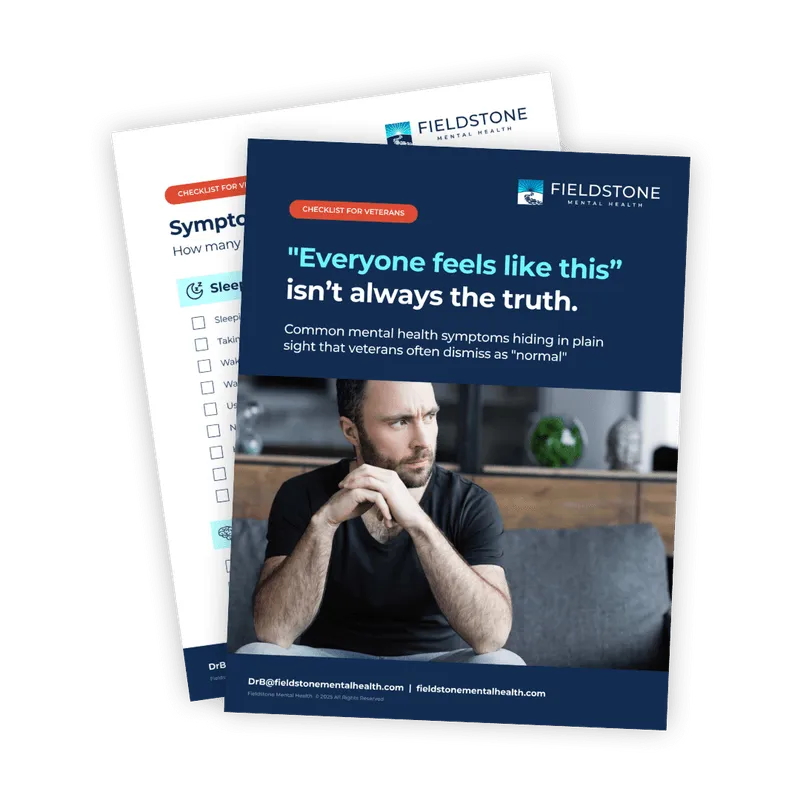
"Everyone feels like this” isn’t always the truth.
What you think is normal may actually be a symptom that shouldn't be overlooked. This free checklist includes 25 symptoms you may have been dismissing.
Download Free Checklist
Available remotely in PSYPACT participating states: AL, AZ, AR, CO, CT, DE, DC, FL, GA, ID, IL, IN, KS, KY, ME, MD, MI, MN, MO, MS, MT, NE, NV, NH, NJ, NC, ND, OH, OK, PA, RI, SC, SD, TN, TX, UT, VA, VT, WA, WV, WI, WY.
If your state is not listed, check the current PSYPACT map to see whether it has been added.